


THE 71ST STERIJINO POZORJE FESTIVAL 2026 (May 26 – June 3)
Selector’s Report
OUR STORIES
Memories and losses
Today, seventy years after the founding of the Sterijino Pozorje, this festival – which initially featured only the works of Jovan Sterija Popović, but now features theaters from the country and the region presenting works by domestic writers – remains the most important theatrical event in Serbia.
“All that was good will be recorded by history,” wrote Jovan Sterija Popović in the preface to his play The Patriots.
Although the selection I propose reflects my personal view of the past season, my mission was to find outstanding performances.
What is the role of theater today, and has it changed? What do we expect from performances, and do we find in them answers to the questions that concern us? What are we really looking for in them, and is it the shared experience, communication, and emotion that connect and fulfill us? Having watched more than forty productions from the current season based on domestic dramatic texts, I encountered entirely authentic, surprising, and diverse responses to these questions. Eight productions stood out above all for their comprehensive approach, exceptional execution, and the diversity of their search for reasons and meaning of existence within the world of theatrical art, as a complex reflection of our time.
Relying on domestic dramatic texts that, through various themes and forms, engage with and reflect our lives, and at the same time connecting classical works with contemporary phenomena, the past season has produced performances that, in addition to possessing exceptional artistic qualities, establish communication with the audience in the best possible way. These were precisely the criteria guiding my selection of this year’s Sterijino Pozorje program, as well as my essential understanding and conception of this most significant festival of national drama and theatre, as a reference point of our stage: a strong textual foundation that enables the development of imaginative acting and thoughtful directing, an active engagement with the present moment, and performances that truly concern the audience.
It is precisely this paradox of transience, of duration within a moment, of memory and oblivion, that constitutes the greatest beauty of this art of dialogue in the broadest sense of the word – both the dialogue on stage and that between the stage and the audience – an art of questioning, play, reflection, and ultimately, of evoking emotion. And emotions reside within us; they are part of our lives, part of our past, but, above all, part of our present. Whether they are memories, sorrows, anxieties, or joys and hopes, all of these are our stories and our dramas.
The selection of performances in the official program of this year’s Sterijino Pozorje represents a collection of diverse theatrical poetics and modes of thinking, united by a shared quality: consistency in the articulation of their own theatrical expression.
Whether it is a new reading of a domestic dramatic classic (The Cabinet Minister’s Wife), dramatizations and adaptations of major works of Serbian literature that still maintain recognizable and significant connections with the present moment and the contemporary viewer (Lady Nola), contemporary classics (The Professional, Tracks), authorial projects (My Theatre, Why Is He Laughing?), or works of a new generation and a new era (Humor Central, Quiet Hours from Two to Six) – these are our stories and our dramas, a cross-section of the best productions from the past season through the prism of domestic texts, pointing to where theatre stands today.
This year, unfortunately, there was no room for the international selection “Circles,” so my focus was on performances based on texts by domestic playwrights.
I propose to the Board of Directors that the following productions be included in this year’s selection of the Sterijino Pozorje Festival:
MY THEATRE, an authorial project by Boris Liješević, Atelje 212 (Serbia)
A performance in which the director examines himself within theatre and within art is truly unique, both in its form and in the themes and questions it addresses. This self-reflective, exploratory approach, through the author’s confrontation with his own memories, recollections, and the actors on stage, creates an entirely new and personal theatre. The ritual of artistic maturation and the coming-of-age of the creative spirit, boldly and deeply intimate, yet above all sincere, becomes on stage something universal and meaningful to everyone, because it concerns all of us who search for an answer to the question of who we truly are. My Theatre affirms the truth of the theatrical ritual – nothing can be hidden on stage.
HUMOR CENTRAL, written by Đorđe Kosić, directed by Olja Đorđević, National Theatre in Belgrade (Serbia)
Based on documentary material, this text deals with real events and figures in occupied Belgrade during World War II. Theatre as a theme in this performance is situated within the circumstances of the war.
Actors of the National Theatre in Belgrade, Jovan Tanić and Aleksandar Cvetković, were executed on November 27, 1944, without trial, because of Humor Central, and under the alleged accusation of collaboration with the occupiers. In the intertwining of wartime conditions and theatrical reality, the question arises: what is truly condemnable in circumstances where living itself is dangerous, and who has the right to pass judgment at all? Another question arises: in such circumstances, is real life actually on stage, while the street becomes a fabricated reality of ideological exclusivity? Evaluating the correctness of the principles that guide an individual in society, and the need to foreground one’s own unquestionable sense of justice to protect an ideological concept, demands deep reconsideration. In the fervor of building something new, the old is ruthlessly dismantled. For if history is written by the victors, should one stand on the side of the victors? A question that repeats itself in all times of war, occupation, crisis, and upheaval remains: to perform or not to perform, to choose the stage or to lower the curtain?
THE CABINET MINISTER’S WIFE, written by Branislav Nušić, directed by Veljko Mićunović, Slovene National Theatre Maribor (Slovenia)
Almost a century after its creation, the illusions, ambitions, and desires of an individual to become someone, regardless of their own abilities or intellectual capacity, are still clearly recognizable in Nušić’s The Cabinet Minister’s Wife.
In this production, the character of Živka, the minister’s wife, is not merely an object of ridicule, but also a victim of the system and the people surrounding her, conveyed through a carefully considered and balanced use of all theatrical means. The performance analyzes the mechanisms of social structure while simultaneously demonstrating how quickly a person can become alienated from themselves when circumstances offer the possibility of power, prestige, and a better life. A classic of our theatre explores deviations from early-twentieth-century social norms, allowing the audience to question their own concepts of merit and ethical values. Today, when such deviations have become the normal state of society, it is up to the director to find the right approach to a great writer, to explore a creative method, and through living theatre to affirm the writer’s universality.
The Cabinet Minister’s Wife thus remains highly relevant as a comedy about social status, identity, and the enduring human desire for belonging and significance.
LADY NOLA, written by Isidora Sekulić, dramatization by Aleksandar Jovanović, directed by Sonja Petrović, Serbian National Theatre Novi Sad (Serbia)
Based on one of the seven short stories from the collection The Chronicle of a Small Town Cemetery, the play Lady Nola brings back into focus, after a long time, one of the greatest Serbian women writers of the twentieth century, as well as the story of a woman struggling with hardships so close to our own, within the context of the time in which we live today. Through this production, marked by a distinctive directorial poetics and approach, the character of Lady Nola is connected to the contemporary woman in her struggle for motherhood and in her reflections on the role of women and the imposed model of female existence, shaped by the lives of our ancestors and those close to us. This is a theme many playwrights have addressed, both independently and as part of a broader picture of society, and Isidora Sekulić certainly holds a significant place in literature among the greatest writers. The original directorial concept, highly complex in structure, approaches great literature by faithfully following its poetic rhythm, affirming a confident and bold directorial signature befitting our great author.
TRACKS, written by Milena Marković, directed by Milan Nešković, National Theatre of the Republic of Srpska, Banja Luka (Bosnia and Herzegovina – Republic of Srpska)
A renewed encounter with Tracks by Milena Marković still speaks powerfully and painfully about a lost generation. The characters in this play grow up during and after the war-torn 1990s in the territory of the former Yugoslavia. In a fragmented, dramatic form, we follow the fate of a group of young men whose lives are marked by violence. They are not only victims of violence but also perpetrators of it. Evil has engulfed all the characters and develops over time into a general aggression. Aggression is everywhere: in school, on the streets. Today, this great work of our theatrical literature confirms its universality by speaking about peace. The significance of such a drama lies precisely in its ability to be understood in different social circumstances, many years later, when its multilayered structure reveals the meaning of peace, a deep need for unattained serenity, and the essential ingredient of life – love. Seemingly rough, love is nevertheless present. In the director’s staging, the powerful momentum of the playwright, a witness of our time, has only gained further strength, never once losing its focus.
This metaphor of violence reminds us once again that we have still done nothing to make the world around us better than it is, but that hope always exists. Tracks that lead to ruin today offer hope.
THE PROFESSIONAL, written and directed by Dušan Kovačević, Zvezdara Theatre, Belgrade (Serbia)
Thirty-five years after its premiere, The Professional still tells our never fully, and never sufficiently told story: on the one hand, life as a struggle for new freedoms; on the other, life that remains stored and recorded somewhere in deep, vast, dusty police archives. The encounter between these two realities and the clash of two perspectives on the same life unfold through compelling acting, once again confirming the greatness and contemporaneity of our greatest living dramatic classic, Dušan Kovačević. What we find ourselves asking while watching the play is: which part of my life is a secret? Can anyone interpret my life differently and, because of that, place me in circumstances I did not choose? Who has that right? If I am that person, with that right, how seriously do I follow my own life?
QUIET HOURS FROM TWO TO SIX, written by Sofija Dimitrijević, directed by Tara Mitrović, Heartefact House, Belgrade (Serbia)
For the past fourteen years, we have grown accustomed to the Heartefact Foundation supporting, nurturing, and promoting highly important, socially engaged, and “sobering” plays, as well as productions from Heartefact House that tell fundamentally human stories. Such is Quiet Hours from Two to Six, where, through the encounter of two women under conditions of oppression and the harsh rules of a community (a residential building), hidden and suppressed emotions, secrets, and unsettling life truths unfold before us. Emerging from illusion and self-deception leads us into a harsh reality in which we cautiously and hesitantly extend a hand and an embrace to another. The outstanding acting confronts us with pain and loneliness. A loneliness that emanates from every spoken and unspoken word of this performance. The hidden, repressed layers of our lives, through the literary foundation, the director’s courage, and the actors’ skill, suddenly surface as something we wish to hold onto forever. Something that cannot be bought, only felt. Difficult to perform, even more difficult to direct, and best suited for the writer.
WHY IS HE LAUGHING?, an authorial project by Đorđe Nešović, National Theatre in Sombor (Serbia)
Why Is He Laughing? is an original project that powerfully and emotionally illuminates life with autism from multiple perspectives, creating a strong connection with the audience and allowing them to better understand people with autism, as well as their loved ones, after the performance. It is a story about families facing autism. The starting point of the play is the director’s personal story about his brother with autism, presented through the lens of theatre, and structurally incorporating the stories of three boys on different points of the autism spectrum. How can autism be represented on stage? What can it mean for theatre, and how does theatre influence awareness of autism? These are just some of the questions raised in this production, which, in its search for answers, receives understanding, love, and powerful embraces from the audience. The director’s signature brings us closer to a universal truth – creativity knows no boundaries; it belongs to everyone, regardless of age, education, or circumstances. On one hand, the creativity of the directing approach; on the other, the creativity of the subject itself, along with the humane aspect that sets us apart from everything else on the planet: we are human.
“In our family, we know where the story of autism begins, but we do not know where it ends – because it still goes on,” the director says.
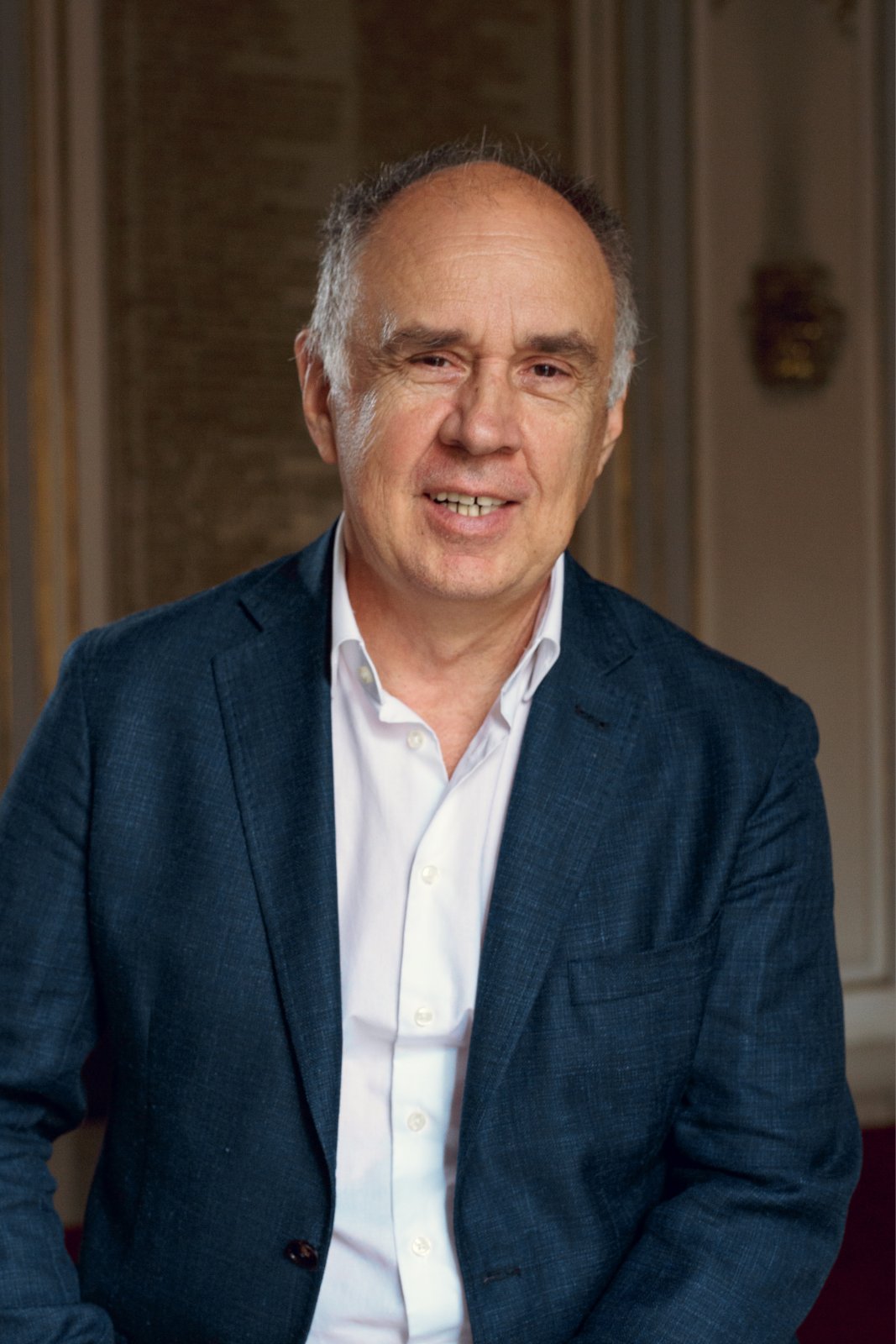
Svetislav Goncić
March 24, 2026